Project Overview
Mérida, the capital of Yucatán, has evolved into one of Mexico’s most vibrant and fastest-growing cities. This urban boom, fueled by both population growth and increased tourism, brought significant traffic challenges. As more vehicles entered the roadways, the city began experiencing long delays, heavy congestion, and overall inefficiencies in mobility.

Mérida's outdated traffic signals relied on fixed schedules and lacked real-time data, making it hard to adjust to rapidly evolving needs. This led to traffic delays, increased emissions, and reduced public satisfaction.
8
Trafficware® Cabinets
52
SynchroGreen® Intersections
42
Gridsmart® Cameras
375
Intersections Managed
367
Trafficware® Controllers
To modernize its infrastructure, Mérida launched a comprehensive smart city initiative in collaboration with Cubic Corporation and Cactus Traffic to develop a scalable, data-driven traffic management system that adapts to real-time road conditions. The strategy was built on deploying intersection detection, modern traffic signal controllers and cabinets, and adaptive signal control, all integrated within a central platform to optimize traffic management throughout the city.
As a result, Mérida has deployed an automated traffic management system (ATMS) across 375 intersections to reduce congestion, increase safety, and significantly cut travel time for all road users—drivers, cyclists, pedestrians, and public transit passengers alike.
Problem: Rapid Growth vs. Aging Infrastructure
Urban Expansion and Spiking Traffic Demand
As Mérida’s population and tourism surged, its road infrastructure lagged. Increased vehicle use overwhelmed the network, especially during peak hours, causing long wait times, frequent traffic delays, and inefficient public transit operations. Without smart traffic systems, the city couldn’t adapt to growing demand.
Outdated Traffic Light Systems and Synchronization Issues
Before the upgrade, only 31 intersections were coordinated. Signals operated on outdated schedules with no real-time adaptability. Key arteries like Avenida Prolongación Paseo de Montejo became chronic obstacles, frustrating drivers and slowing emergency services. The static setup failed to optimize traffic flows or adjust based on time of day or volume.
No Real-Time or Predictive Response
The legacy system couldn't respond to accidents, weather disruptions, or shifting traffic patterns. There was no mechanism to leverage data collected for predictive control. Without machine learning or real-time updates, it was impossible to react effectively to variable road conditions or to optimize for fuel consumption, emissions, and safety.
Solution: Scalable, Smart Traffic Management
Smart City Infrastructure: The Backbone of Mobility
To address these limitations, Mérida invested in smart city infrastructure—a comprehensive framework enabling proactive, adaptive traffic control. The city installed intersection detection, cabinets and controllers all integrated via Cubic’s Advanced Transportation Management System.
This centralized system processes real-time data with AI-powered adaptive algorithms to recognize traffic patterns, optimize signal timings, and manage citywide traffic more efficiently. With this smart system, the city can now respond dynamically to road conditions, improve safety, and reduce time spent in traffic.
Phase 1: Adaptive Signal Control with SynchroGreen®
In the first phase, over 300 intersections were integrated into the ATMS. A subset of 52 high-priority intersections was upgraded with SynchroGreen adaptive signal control. Unlike traditional traffic signals, SynchroGreen continuously adjusts timing based on real-time data, including traffic volume, time of day, and intersection conditions.
No Real-Time or Predictive Response
The legacy system couldn't respond to accidents, weather disruptions, or shifting traffic patterns. There was no mechanism to leverage data collected for predictive control. Without machine learning or real-time updates, it was impossible to react effectively to variable road conditions or to optimize for fuel consumption, emissions, and safety.
- This approach offers numerous benefits:
- Reducing travel times by adapting to live traffic conditions
- Fewer vehicle stops, reducing fuel usage and emissions
- Centralized management of entire traffic network
- Improved travel time across heavily used corridors
Signals can now be fine-tuned down to the minute, cycle, or phase, enabling flexible and efficient response to real-world traffic.
Phase 2: Intelligent Detection and Transit Priority
In the second phase, Gridsmart® video detection systems were installed at 42 additional intersections. These systems provide 360-degree visibility with a single camera solution—monitoring intersections to maximize efficiency and enhance pedestrian safety.
The inclusion of Trafficware® controllers and traffic signal cabinets enhanced the responsiveness of intersections, allowing the system to manage complex vehicle movements and prioritize public transit and emergency vehicles. These updates also support dedicated lanes for cyclists and buses, further encouraging sustainable transit options.
The complex system infrastructure ensures:
- Improved emergency response times for ambulance, fire trucks, and police
- Reduced delay for buses and improved transit reliability
- Increased safety for vehicles, bicycles and pedestrians
This advanced technology gives city planners more control, not just for the current volume but for projected increases based on the controller and detection data collected.
Environmental and Social Impact
The adaptive system’s efficiency translates into tangible environmental benefits. With fewer stops, smoother traffic flows, and shorter idle times, vehicle emissions have decreased significantly. As a result, Mérida has improved air quality and contributed to climate goals.
The prioritization of public transport and the accommodation of non-motorized road users like cyclists and pedestrians promote healthier, more inclusive mobility. This supports social equity by expanding accessibility for all city residents.
Moreover, by relying on AI and machine learning to classify and predict traffic trends, the city can continuously evolve its system, improving outcomes over time.
Key Results
Mérida’s smart traffic initiative has produced impressive early results:
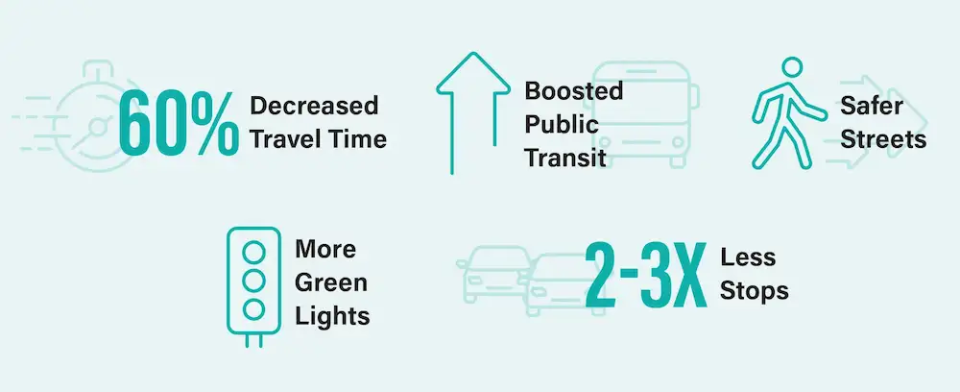
These achievements underscore the potential of intelligent traffic management in transforming cities. By embracing a smart city approach and integrating real-time insights into infrastructure planning, Mérida is setting a powerful example for other urban centers facing similar mobility challenges.
Conclusion
Mérida’s investment in next-generation traffic management demonstrates how cities can overcome the limitations of outdated infrastructure through technology. With real-time responsiveness, AI-powered systems and centralized traffic management, the city has significantly improved mobility, safety, and sustainability.
By integrating data collected across its intersections, prioritizing public transit, and adapting to the natural ebb and flow of daily traffic, Mérida now enjoys a smooth, smart, and more efficient transportation network. The city’s ability to manage traffic dynamically based on time of day, volume, and predicted demand is a key milestone in its evolution as a modern city.
As Mérida continues to grow, its smart traffic system will scale alongside it—making reduced wait times, fewer stops, and safer streets the standard for years to come.

Luis Felipe Saidén Ojeda
Commander and Secretary of Public Security
Cubic smart traffic management solution has transformed the way we approach urban mobility. The improvements have been remarkable—reduced traffic congestion, faster commute times, and smoother public transport flow. What we appreciate most is the flexibility of the system. It adapts to the city’s needs, and as Mérida grows this technology will continue to evolve with us. Our streets are safer, our roads are more efficient, and the city feels more connected than ever.
Partners