Key Takeaways
- Contactless open payment has evolved from pilot programs to essential transit infrastructure, replacing slow, costly, closed-loop fare systems.
- Global deployments proved scalability across different transit systems, multimodal networks, and governance structures, with major transit agencies achieving high adoption and sustained customer satisfaction.
- Fare payments using existing bank cards and mobile wallets create seamless regional travel experience and eliminate barriers for riders, visitors, and occasional users.
- Agencies gain operational advantages: reduced cash handling costs, faster boarding, real-time data for planning, and the ability to integrate across operators without complex technical agreements.
- Successful implementation depends on organizational readiness – staff training, policy coordination, and maintaining equitable payment options, rather than technical innovation.
- The strategic question has shifted from whether to adopt contactless to how agencies position themselves to be in a connected mobility ecosystem as this becomes a baseline infrastructure.
From Innovation to Infrastructure
Five years ago, fare collection was a bottleneck that many transit agencies had learned to live with.
Cash handling slowed boarding and tied up staff. Proprietary card systems limited riders to single-agency accounts. Tourists fumbled with ticket machines, delaying locals queuing behind them. Every metropolitan area operated its own closed payment ecosystem, incompatible with the next city over.
The operational costs were substantial: cash processing, farebox maintenance, ticket vending machine downtime, and the staffing to support it all. Transit agencies needed a better solution but were unsure whether contactless technology would work with their system.
Then the broader payments landscape shifted. Credit and debit cards with tap-to-pay capability became ubiquitous. Mobile wallets went mainstream. The same technology people used to buy coffee was already in their pockets when they boarded transit.
The question became obvious: why operate separate fare payment systems when riders already carry credentials that work everywhere else?
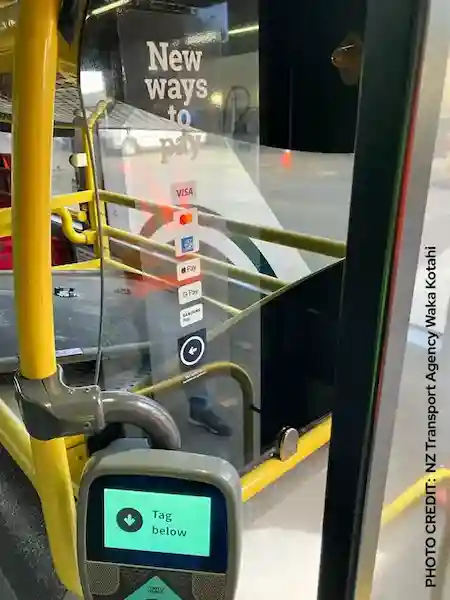
Open payments answered this. Instead of issuing proprietary transit cards, agencies could accept the bank cards and mobile wallets riders already use. Early successes in London, Singapore, and Sydney proved the concept could work. But scaling across different governance structures, fare policies, and operational contexts remained the critical question.
The deployments that followed provided the answer.
Queensland recorded over 200 million contactless trips in the first 12 months after launch. Sydney Metro surpassed 100 million contactless trips and achieved 98% customer satisfaction. The MBTA processed 50 million taps across its subway, bus, trolley, and ferry multimodal network.
In the United Kingdom, c2c became the first fully contactless national rail operator, recording 3 million contactless journeys within a year. More recently, New Zealand launched Motu Move as part of a national integrated ticketing system in Greater Christchurch, while Austin's CapMetro and BC Transit introduced open payments in Whistler and Pemberton.
Different systems. Different scales. Different challenges. Same trajectory.
Contactless payments moved from pilot programs to production platforms. What started as innovation became infrastructure.
The Infrastructure Shift: From Ticketing to Access
Something fundamental changed as these systems matured.
Contactless became the dominant payment method for Sydney Metro trips. In Queensland, the statewide rollout made regional connectivity dependent on it. In Boston, MBTA Tap to Ride now underpins daily travel, serving as essential infrastructure. These systems no longer offer supplementary payment options anymore – they operate as core infrastructure for public transit.
Customer expectations reflect this reality. When contactless systems experience outages, complaints spike immediately. Riders aren't frustrated by a failed experiment. They're frustrated by infrastructure that isn't working. Agencies now build contactless systems with the same redundancy and reliability standards they apply to signaling or power.
The infrastructure shift also unlocked new operational capabilities: seamless visitor access, regional fare integration without proprietary exchanges, real-time ridership data across networks, and multimodal trip tracking from bus to train to ferry.
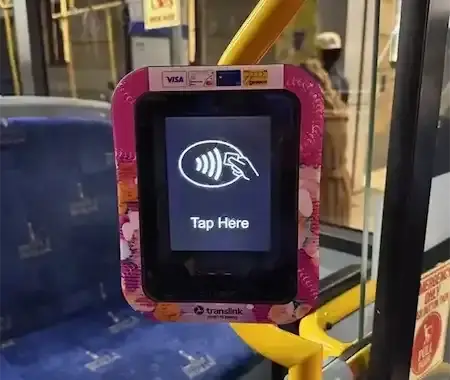
Queensland's 50-cent fare initiative showed how this works in practice. The reduced fare made transit more affordable, while contactless made it easier to access. Riders tapped their existing cards or phones without purchasing transit-specific cards, loading fare products, or understanding ticket eligibility. The barrier to entry disappeared.
The accessibility impact extends beyond affordability. Visitors navigate transit without deciphering ticket machines in unfamiliar languages. Occasional riders use the service without purchasing dedicated cards. For populations inadvertently excluded from closed systems, this shift matters.
How Open Payments Changed Everything

Traditional transit payment was necessarily closed-loop. Agencies issued their own cards, managed stored value, and operated proprietary systems. When two agencies sought interoperability, they negotiated bilateral agreements to recognize each other's proprietary media formats. Every connection required custom integration.
Open payments fundamentally changed this architecture.
Banking networks are now standardized globally, and the addition of mobile wallets enables tap-to-pay everywhere from grocery stores to transit gates. When Brisbane and Sydney both accept contactless bank cards, they're connecting to the existing standard global financial infrastructure.
This is why New Zealand could launch Motu Move as part of a national integrated ticketing system compatible across cities. The challenge shifted from credential compatibility to fare policy coordination across operators.
The practical impact is immediate. A rider with a contactless bank card uses it across different transit providers within a region. No special transit card to buy. No account to set up. The infrastructure handles it because operators share a common standard.
c2c in the UK demonstrated this at the most complex level. National Rail fare structures involve hundreds of zones and ticket types. Moving entirely to contactless required sophisticated fare calculation logic, but the fare collection infrastructure already existed. The agency could focus entirely on service design rather than building payment systems.
Once the payment layer is standardized, innovation shifts upward from transaction mechanics to customer experience.
What Drives Public Transit Adoption

The public narrative around contactless emphasizes customer convenience: faster boarding, no tickets to fumble with, and using the card you already have in your wallet.
The internal drivers are more fundamental.
Cash handling requires farebox maintenance, armored-car contracts, revenue-counting staff, bank reconciliation processes, and customer service for cash-related issues. Every cash transaction carries operational overhead. Contactless eliminates that entire infrastructure layer.
Transaction speed matters operationally, not just for customer experience. Faster boarding allows agencies to maintain or increase service frequency without adding vehicles. The efficiency compounds across entire networks.
Customer service resources shift. Station agents and frontline staff spend less time explaining fare structures or troubleshooting ticket machines, and more time on customer assistance, wayfinding, and safety oversight.
Real-time operational data becomes available on an unprecedented scale. This transforms service planning from backward-looking reports to forward-looking forecasts, enabling agencies to optimize service based on actual ridership patterns rather than historical averages.
These aren't aspirational benefits. They're the operational realities that built the business case for implementation.
From Contactless to Connected
The agencies deploying contactless today aren't simply replacing fare payment technology. They're building platforms for capabilities that weren't previously feasible.
Regional fare integration becomes practical without proprietary card exchanges or bilateral agreements. A single credential works across multiple agencies because they share a common infrastructure.
Multimodal trip tracking connects bus, train, and ferry services under a unified fare policy, so riders don’t need to manage multiple accounts or understand which operator runs which route.
Automatic fare optimization ensures riders pay the best available rate across their travel patterns, without needing to understand complex fare structures or remember to tap differently.
The technical foundation for all of this exists. The work ahead is policy alignment across operators, not technology invention.
The Transit Adoption Pattern
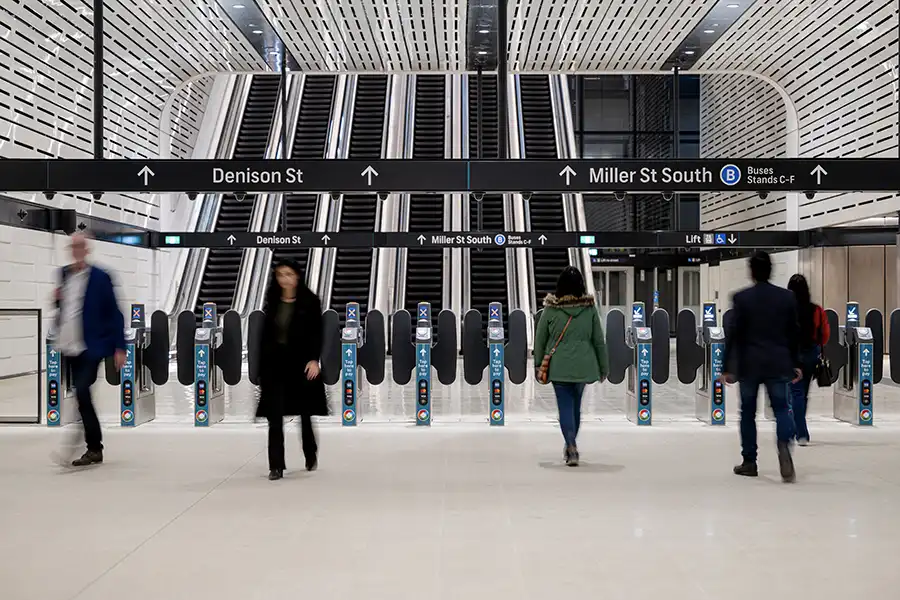
The trajectory from pilot to platform has followed a consistent path across different governance models and market conditions.
Statewide deployments demonstrate scalability beyond single metropolitan areas. National rail coverage proves the approach works for complex fare structures. Multimodal implementations show it functions across different transport modes and operational systems. These are production systems processing millions of transactions, not experiments.
The pattern is consistent: agencies that implement contactless report reduce cash-handling overhead, improve boarding efficiency, enhance data visibility for planning, and experience higher customer satisfaction. The agencies that haven't moved yet face compounding operational costs and rising customer expectations shaped by what peer systems now deliver.
What This Means

The strategic question has shifted from whether contactless works to how agencies position themselves as it becomes baseline infrastructure.
Agencies focused on reducing cash handling costs will approach deployment differently than those prioritizing service speed or enhanced planning data, even though the technology delivers all three. Existing infrastructure determines integration complexity – newer backend systems face smoother technical transitions, while legacy systems require more integration work but often realize larger operational gains.
The most successful deployments share common elements: maintaining alternative payment options during rollout to ensure equitable access, investing in comprehensive staff training before launch, and communicating clearly with riders throughout the transition.
What many in the industry already understand is becoming evident: the barriers to contactless adoption are organizational and operational, not technical.
The systems deploying contactless today are building infrastructure for capabilities that extend well beyond payment: regional ticketing integration, multimodal connectivity, data-informed service planning, and seamless visitor access.
The systems waiting face a different calculus. Operational costs compound. Customer expectations rise. The gap between what contactless enables and what closed systems deliver continues to widen.
Contactless payment isn't innovation anymore. It's infrastructure. And, as with all infrastructure, the question eventually shifts from whether to adopt it to how much longer you can operate without it.